

Create your own group of participants from our crowd

On our marketplace, you can create any number of Clickworker groups through the menu item Participant Groups “Internal”. These groups can then be selected (invited) or excluded (blocked) as participants during the order process.
Usage of Participant Groups
Creating a Group of Authors
A group of writers can be effectively formed from authors/Clickworkers whose previous work you found particularly impressive. This allows you to direct subsequent orders specifically to Clickworkers from your author group. This way, you can better control the results and optimize them according to your expectations.
Similarly, it can be helpful to specifically exclude certain author groups. For example, you can block authors whose style or thematic focus doesn’t match your requirements. This ensures that your orders are only processed by suitable Clickworkers.
Creating Online Lexica and Online Glossaries

Corporate identity, crossmedia and workflow, resilience and synergy – the language of the modern world teems with Anglicisms, buzzwords and special terms whose meaning is not immediately clear to everyone. Online lexica and online glossary texts can provide relief where internet surfers or media users are in danger of getting lost in the jungle of foreign words and digital tech jargon.
Online lexica and glossaries simply and concisely explain a subject’s complicated terms and in this way make the issue being discussed understandable for a wider audience. Online lexica, as a separate electronic database, provide the user systematically organized, general or specialized information that is as comprehensive as possible. On the other hand, online glossary texts are attachments (so-called addendums) to a blog or website, that further define the central technical terms used in the article by providing synonyms, translations or explanatory sentences.
Today’s printed or digital glossaries consist of lists of terms and their explanations, usually arranged in alphabetical order. Their origin goes back to antiquity where it was common to use marginal notes (so-called glosses) to facilitate the reading of written works. The most well-known online lexicon, available in various language versions, is offered by the free-licensed encyclopedia Wikipedia, which is compiled by many co-authors.
What makes a good fashion text? A short guide
Anyone who is online comes across product descriptions. Online fashion shops not only rely on great pictures but also on the powers of persuasion of talented writers to present their items in the proper light. The everyday tasks of many of our Clickworkers involve writing product descriptions or category texts because clients need more than just a great picture. They also need an appealing text to know what makes a piece of clothing so special. 1 Comment
Crowdsourcing in tourism
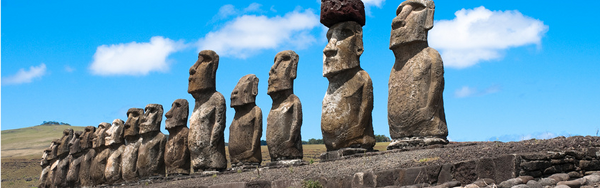
As a whole, the United States, China and Germany are the major travel nations. But many other countries have followed suit with regard to tourism. Worldwide, spending for travel services has been on the increase for years. The tourism industry is obviously delighted! However, the pleasure is even greater when the use of crowdsourcing provides the tourism industry with effective support to handle increased and new challenges. We want to present a few practical project examples.


