


Product feedback serves as the heartbeat of consumer-centric businesses. It gives companies a clear insight into what their customers truly desire. This continuous loop of information between users and product teams is the cornerstone of improvement and innovation.
By capturing and analyzing customer feedback, you can understand the nuances of customer satisfaction and the impact of your product on people’s daily lives. Engaging with your customers not only builds trust but also invites valuable perspectives. These perspectives can propel your product development, ensuring that the product evolves in alignment with user needs and expectations.
The integration of this feedback into your development cycle enables a dynamic and responsive approach to product strategy.
Through various feedback collection methods such as surveys, reviews, user testing, and direct communication, businesses gather immense data that, when analyzed effectively, can lead to informed decision-making.
Employing tools that provide multimodal affect analysis can reveal the depth of customer emotions and experiences Multimodal affect analysis for product feedback assessment.
Moreover, deciphering the significance of product reviews in a market of repeat purchase products plays a telling role in the competitive landscape Product reviews and competition in markets for repeat purchase products.
The blend of technology and strategic feedback management can help overcome common challenges such as skewed distributions of feedback and unlock a treasure trove of insights to fuel growth Overcoming the J-shaped distribution of product reviews.
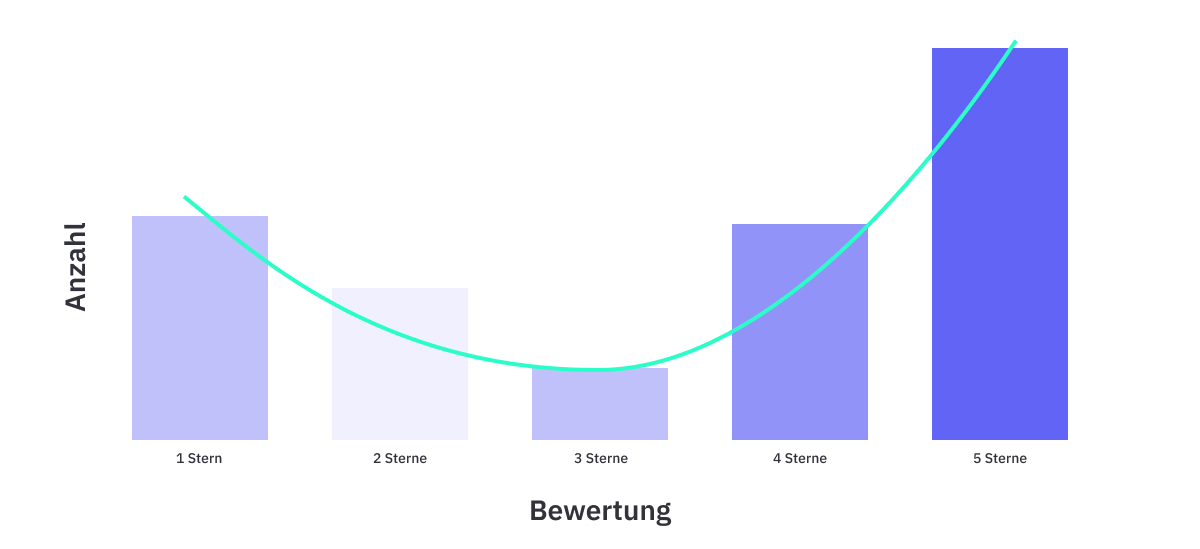
Table of Contents
When navigating product feedback, it’s essential to distinguish between the feedback types you may encounter. These categories not only define the nature of the feedback but also guide how you can effectively use it for product improvement.
Solicited Feedback: This is the feedback you actively seek out. Often, it involves direct inquiries, such as surveys or reviews that you request from your customers.
For instance, you might ask them to rate a recent purchase or service experience. Here’s a real-world example: you launch a new feature on your app and send a survey to users asking for their opinions and ratings.
Unsolicited Feedback: This feedback arrives without any direct request from you. Customers may share their experiences voluntarily, often via social media or online reviews.
They could tweet a praise or complaint, or leave a detailed product review on your e-commerce platform.
Direct Feedback: Received directly from the customer, this type of feedback leaves little room for misinterpretation. A customer might email you explaining what they appreciate about your product, or what could be enhanced.
Indirect Feedback: This comes via third parties or is observed rather than directly communicated. You might infer customer preferences by analyzing product usage patterns or discussing them with your sales team.
Collect Product Feedback from a Global Panel
The clickworker survey tool lets you reach over 10 million verified respondents worldwide. Design targeted product feedback surveys, select your audience by country, language, age, or device, and get results fast.
Try the clickworker Survey Tool
Effective feedback collection is a critical component for understanding customer preferences and improving products. By leveraging specific methods, companies can ensure they gather high-quality data that informs meaningful changes.
Feedback forms and surveys allow for structured responses that are easy to analyze. Crafting good survey questions results in more reliable data.
In the context of product research, a well-designed questionnaire can be a treasure trove of insights, enabling businesses to adapt to consumer needs.
Using online feedback platforms, such as feedback buttons on a website, can be an immediate way for customers to report their experiences.
These platforms offer a continuous stream of feedback, capturing user sentiment during product interaction.
For comprehensive guidance on collecting this type of feedback, exploring resources on effective product research questionnaires can be beneficial.
One-on-one customer interviews provide a depth of understanding that can be hard to capture through other means.
Companies can conduct interviews in-person or virtually, gaining nuanced insight from customer expressions and reactions.
Techniques such as focus groups also allow for a more conversational approach where customers can discuss the product in a group setting.
Effective feedback data analysis transforms customer opinions into actionable insights, guiding you towards smarter business decisions and sharper market strategies.
Identifying trends and patterns from feedback helps understand customer preferences and market shifts, ensuring your products stay relevant.
Analyzing your target audience data alongside feedback garners crucial insights into ideal customer profiles, streamlining product features to meet their expectations.
Spotting a recurring mention of a feature suggests it’s striking a chord with your audience, pointing to potential areas for expansion or highlighting what sets you apart from the competition.
Prioritizing improvements demands a strategic approach to sift through feedback data, making complex decisions simpler.
Considerations for this process can include urgency, cost, and projected ROI.
Measuring customer satisfaction sheds light on customer happiness, which correlates to their continued patronage and can inform the prioritization process.
A high volume of similar feedback can amplify the need for immediate action, streamlining your approach to product enhancement.
Natural language processing (NLP) plays a pivotal role in feedback analysis.
It dissects the nuanced language of customer feedback — breaking it down into digestible, actionable insights.
Techniques such as sentiment analysis illuminate the emotions behind the words, enabling a more nuanced response to feedback.
Mastering NLP can ensure a level of feedback data trust — ensuring you’re not just listening, but truly understanding what your customers communicate.
When developing products, incorporating user feedback is essential to aligning your offerings with the market’s needs and ensuring that the end user’s voice drives innovation and design improvements.
To build products that truly resonate with customers, it’s crucial to embed the voice of the customer into every stage of product development.
This involves collecting and analyzing feedback, which can be gathered through methods such as concept testing.
This kind of testing offers a chance to understand consumer reactions before a product hits the market, allowing for design improvements based on actual user needs.
While feedback is vital, maintaining a balance between user opinions and the original product vision is necessary to keep the product’s essence and innovation intact.
Design tests and structured usability evaluations ensure that user suggestions enhance the product’s design, rather than detract from its core functionality or aesthetic.
An informed decision-making process should value user input without compromising the unique value proposition your product offers.
User Experience (UX) enhancement is the cornerstone of successful products.
Utilize UI testing to refine the visual elements and interface, ensuring that users find your product not only functional but also pleasant to interact with.
UX and UI research can greatly inform product adjustments, making refinement an ongoing process that continuously elevates the user’s interaction with your product.
In today’s digital landscape, effective feedback tools and technologies are crucial for honing products and services. They range from in-app mechanisms to advanced software solutions, each pivotal in capturing the voice of the customer.
In-app and contextual feedback mechanisms allow you to gather immediate reactions from users while they are interacting with your product.
Real-time feedback is invaluable, as it gives you insights into user experience precisely when and where they encounter issues or have suggestions.
For instance, feature prompts can ask for feedback after a user completes an action, ensuring that their response is directly related to their immediate experience.
Dedicated customer feedback software streamlines the collection and management of user input. It can centralize responses from various platforms, enabling you to oversee and act upon feedback efficiently.
Many tools offer analytics capabilities, turning raw data into actionable insights that can guide improvements. The clickworker survey tool combines audience targeting, survey creation, and results reporting in a single self-service platform.
To maximize the effectiveness of your feedback strategy, look for tools designed to enhance collection efficiency. This includes software that automates the distribution of surveys and compiles results effortlessly.
Furthermore, feedback analysis tools using big data technology can sift through vast amounts of information to pinpoint trends, reduce noise, and deliver clear directions for product development.
Navigating the complexities of feedback management can be intricate, involving specific challenges that must be addressed to refine customer engagement and product evolution.
The accurate collection of representative feedback is crucial for making informed decisions. However, it can be challenging to gather responses that accurately reflect your entire customer base.
Employing effective audience targeting and segmentation strategies is essential to boost response rates and gain actionable insights. Without this, feedback may not be entirely reliable, leading to skewed data and misguided product improvements.
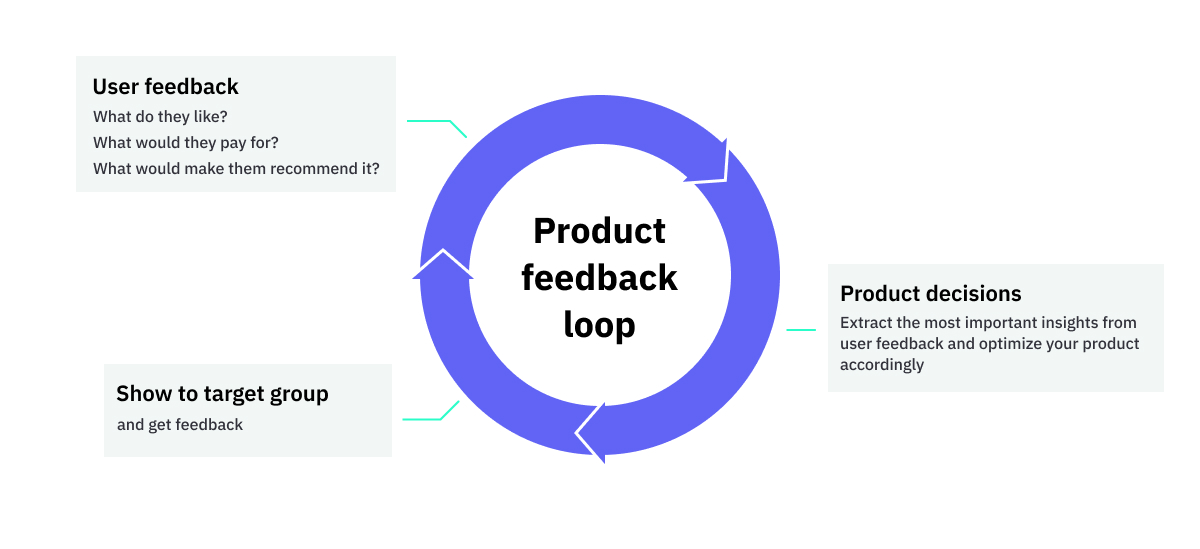
Constructing a robust feedback loop is imperative for continuous process improvement. However, difficulty often arises in establishing a loop that promptly and efficiently integrates customer feedback into product development.
Segmentation of feedback data is equally important to identify and prioritize areas for improvement. Establishing clear, structured pathways for feedback to inform business strategies can significantly enhance feedback process improvement.
Product feedback stands as a vital conduit for enhancing your products and aligning them with customer expectations. By implementing a robust feedback strategy, you can transform customer insights into actionable business tactics.
Purpose and Scope: Start by defining the purpose of collecting feedback, and the scope of its use. Focus on the critical objectives — improving product quality, customer satisfaction, and enhancing user experience.
Channels and Methods: Establish various channels for feedback collection: surveys, user testing, support tickets, and social media interactions. Opt for methods that encourage honest and detailed feedback such as open-ended questions and rating scales.
Feedback Analysis and Action Plan: Determine how feedback will be reviewed and analyzed. Create a feedback loop where product teams are informed and can prioritize actions based on customer feedback.
Documentation and Responsiveness: Maintain a documented policy for recording feedback. This ensures a clear path for responses and solutions, showing customers their feedback is valued and taken seriously.
Integrating Customer Feedback: Leverage customer feedback to shape your business strategy. Insights gathered can highlight new market trends, customer pain points, and opportunities for product innovation.
Feedback for Product Development: Feedback-driven development entails a specific strategy in which customer input directly influences product updates and features. Incorporating customer insights ensures your products evolve with your customers’ needs.
Addressing Challenges: When feedback exposes challenges or issues, respond proactively. Implement solutions that not only resolve specific problems but also refine the overall product experience.
Tracking and Reporting: Utilize consumer tracking techniques to monitor the effectiveness of changes made based on feedback. Reporting on these outcomes can guide future strategies and investments.
Market Knowledge: Stay ahead in the market by combining feedback data with structured product research questionnaires. Align product features and enhancements with the precise needs and preferences expressed by your customers.
Product feedback is any information customers provide about their experience with a product — what works, what doesn't, and what they wish were different. It matters because it closes the gap between what a product team assumes users need and what users actually experience. Systematic feedback collection leads to better product decisions, higher satisfaction, and stronger retention.
The most common methods are surveys and questionnaires (structured, easy to scale), customer interviews and focus groups (qualitative, deep insights), in-app feedback prompts (real-time, contextual), online reviews and social media monitoring (unsolicited, broad reach), and user testing sessions. The best strategy combines several of these to get both breadth and depth of insight.
Solicited feedback is actively requested — for example, a post-purchase survey or a follow-up email asking users to rate a feature. Unsolicited feedback arrives without prompting, such as a tweet, an app store review, or a comment on a forum. Both types are valuable: solicited feedback is easier to structure and analyze, while unsolicited feedback often reveals issues that customers wouldn't mention if asked directly.
Start by categorizing feedback by theme (e.g., usability, pricing, missing features) and frequency. Look for recurring patterns that signal widespread issues rather than isolated edge cases. Sentiment analysis and natural language processing (NLP) tools can help process large volumes of open-ended responses. Prioritize improvements based on the combination of frequency, urgency, and estimated business impact.
For quantitative surveys, a sample of 100–200 respondents is typically sufficient to identify statistically significant patterns in a defined target group. For qualitative interviews or usability tests, 5–10 sessions can already reveal the majority of usability issues. The key is that your sample matches your actual target audience — a large but unrepresentative sample produces misleading results.
Map each piece of feedback against your product roadmap and score it by three criteria: frequency (how many users mention this), impact (how much it affects the user experience or business metrics), and effort (how complex the fix is). Issues that score high on frequency and impact but low on effort should move to the top of the backlog. Sharing this scoring logic with stakeholders keeps prioritization transparent and data-driven.
Surveys are one of the most efficient ways to collect structured product feedback at scale. They work best when questions are neutral, specific, and focused on one topic at a time. Combining closed-ended rating scales (for easy benchmarking) with open-ended questions (for nuanced context) gives both quantitative comparability and qualitative depth. Platforms like the clickworker survey tool allow you to target precise audience segments, ensuring your feedback reflects your actual customer base.


