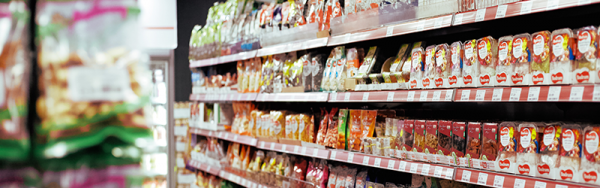
Walk into any well-run store and you’ll notice something: every product placement, every promotional sign, every loyalty offer is the result of a deliberate decision. That’s in-store marketing at work. Brands and retailers invest heavily in strategies designed to influence shoppers at the exact moment they’re ready to buy. Yet a surprisingly large share of these campaigns never deliver their intended results — not because the strategy was wrong, but because execution at store level breaks down. Products end up in the wrong aisle, promotional displays go up late or not at all, and planogram compliance is nobody’s top priority on a busy Tuesday morning. This post walks through the core in-store marketing strategies that consistently drive revenue, explains why retail execution is the link most companies underinvest in, and shows how to close the gap between what’s planned at headquarters and what actually happens on the shelf.
Table of Contents
In-store marketing encompasses all activities designed to influence shopper behavior within a physical retail environment. It covers everything from product placement and shelf presentation to in-store promotions, digital signage, loyalty programs, and staff interactions. The defining characteristic is proximity: unlike digital advertising, in-store marketing reaches the customer at the moment of purchase, when buying intent is already high.
Most marketing channels work on awareness and consideration — they move shoppers toward a store. In-store marketing takes over once they’ve arrived. Its job is to convert browsing into buying, increase basket size, and build the kind of experience that brings customers back. Because of this, it operates on different metrics: not clicks or impressions, but conversion rate, average transaction value, and repeat visit frequency.
In most organizations, in-store marketing sits at the intersection of trade marketing, category management, and retail operations. Brand manufacturers define the strategy and provide the materials. Retailers control the physical space. Field teams or crowdsourced auditors verify that what was agreed actually ends up on the shelf. When these three parties aren’t aligned, execution suffers — and so do sales.
Physical retail has faced sustained pressure from e-commerce, but the in-store channel continues to generate the majority of consumer goods revenue globally. Understanding why helps clarify where in-store marketing investment pays off most.
Research consistently shows that a significant share of purchase decisions happen inside the store, not before entering it. Shoppers respond to visual cues, price signals, and product positioning in ways that digital channels can’t replicate. The tactile experience of picking up a product, the smell of a bakery section, the visibility of a well-executed promotional display — these all influence what ends up in the cart. Point of purchase marketing capitalizes on this: the closer a stimulus is to the moment of purchase, the higher its conversion potential.
E-commerce excels at convenience, breadth of assortment, and price comparison. Physical retail has advantages that are much harder to replicate: sensory experience, immediacy (no delivery wait), social interaction, and the ability to discover products without an algorithm guiding every step. In-store marketing exploits all of these. A well-placed end-cap display, a product demo, or a knowledgeable sales associate can drive a purchase that no retargeting ad could have triggered.
The following strategies have proven track records across grocery, FMCG, fashion, and specialty retail. None of them are new — what changes is how systematically they’re executed and measured.
Placing low-cost, high-relevance items at high-traffic locations — checkout lanes, endcaps, category crossover points — is one of the oldest and most reliable levers in in-store marketing. The mechanics are straightforward: reduce the friction to purchase (low price, visible placement, clear value proposition) and let shopper psychology do the rest.
What makes this strategy fail is poor execution. The bin is empty, the display is hidden behind a floor stack, or the item is priced incorrectly. Two rules hold across virtually every retail category: the lower the price point, the higher the impulse conversion rate; and placement visibility matters more than promotional messaging. A product that can’t be seen can’t be bought.
A loyalty program is one of the few in-store marketing investments that generates data alongside revenue. Done well, it increases visit frequency, raises average basket size, and provides the behavioral data needed to personalize future in-store promotions.
The most common reason loyalty programs underperform is a mismatch between the reward structure and the shopper’s actual motivation. Punch cards still work for coffee shops where visit frequency is high and the reward is tangible and fast. Points programs work for grocery and pharmacy where basket size justifies the complexity. The format should follow the shopping behavior, not the other way around.
In-store promotions serve several objectives simultaneously: they drive trial for new products, clear excess inventory, attract price-sensitive shoppers, and generate short-term revenue spikes. The challenge is that promotional effectiveness varies enormously depending on placement, timing, and how well the promotion is communicated at the shelf.
Price promotions are the most common format, but they’re also the most commoditized. Retailers and shoppers have been conditioned to expect them, which erodes their incremental impact over time. Higher-performing alternatives include bundling (buy two, get one), threshold promotions (“spend $30, get $5 off”), and experiential formats such as tastings or demos. These create a reason to engage that goes beyond price alone.
Gift cards are consistently underutilized as an in-store marketing tool. From a cash flow perspective, they’re attractive: payment is received before any cost is incurred. From a customer acquisition perspective, gift cards bring new shoppers into the store who might not have visited otherwise. The recipient is, by definition, a qualified lead.
Placement matters here too. Gift cards displayed near checkout or at service counters outperform those buried in a dedicated rack in a low-traffic area. Seasonal placement — visible in the weeks before major gift-giving occasions — significantly increases sell-through.
Visual merchandising is the discipline of presenting products in a way that maximizes both appeal and sales. It encompasses shelf layout, product facing, signage, lighting, and the overall flow of the store environment. Planogram compliance — the degree to which actual shelf conditions match the intended layout — is the operational counterpart: it ensures that what was designed and agreed upon actually gets implemented.
This is where most in-store marketing investments either pay off or get wasted. A beautifully designed planogram that’s 60% compliant at store level will deliver a fraction of its projected results. Studies from ECR Europe and various FMCG manufacturers put the revenue impact of poor planogram compliance at 3–8% of category sales — a material number at any scale.
Planogram compliance starts with knowing what’s actually on the shelf.
clickworker’s Display Audit uses local Clickworkers to photograph and document shelf conditions at scale — across hundreds of stores, within days. No field team required.
Learn About the Display Audit
In-store marketing isn’t only about physical materials and product placement. The human element — how staff greet customers, how knowledgeably they answer questions, how consistently they follow brand standards — is a form of in-store marketing that most brands and retailers treat as an afterthought.
Service quality has a direct impact on conversion and return visits. A shopper who can’t find a product and receives no assistance is likely to leave without buying. One who gets a confident, helpful recommendation is likely to buy more than they planned. Mystery checks — where trained, anonymous testers evaluate the customer experience firsthand — are the most reliable method for assessing service quality across locations. Unlike surveys, they capture actual behavior rather than self-reported performance.
Retail execution is the process of implementing in-store marketing plans accurately and consistently across all store locations. It’s the operational layer that connects strategy to outcome — and it’s where the gap between intention and reality tends to be largest.
The disconnect between headquarters planning and store-level reality is one of the most persistent challenges in retail and FMCG. Field teams are stretched thin. Store managers have competing priorities. Promotional materials arrive late or get placed incorrectly. Products are out of stock on the day a campaign launches.
A study by Acosta found that 49% of in-store promotions are not fully executed as planned. That figure includes everything from missing POS displays to incorrect pricing to products that weren’t replenished in time. The financial implication is significant: a $1 million promotional budget that’s only 51% executed as planned delivers roughly half the expected return.
A store check is a structured, on-site verification of actual shelf conditions against planned standards. It answers the questions that sales data alone can’t: Is the promotional display in place? Are the correct products at the correct shelf position? Is the pricing accurate? Is the signage visible and intact?
Traditional execution verification relies on field sales representatives, who are expensive, limited in geographic reach, and often have conflicting priorities (selling vs. auditing). Crowdsourced store checks — using a network of local verifiers with smartphone-based task apps — offer a scalable alternative. They cover more locations in less time, at lower cost per data point, and without the bias that can come when the person doing the audit works for the brand they’re auditing.
clickworker operates a network of over 10 million local Clickworkers worldwide. For retail execution verification, this means a brand can get photographic evidence of shelf conditions across hundreds of stores within 24–72 hours — including planogram compliance, promotional display status, on-shelf availability, and price label accuracy. The data feeds directly into the planning cycle, allowing trade marketing teams to correct execution failures before they cost the full campaign period.
Don’t let execution gaps erode your in-store marketing ROI.
clickworker’s Store Check service delivers photo-documented shelf data from local verifiers — scalable, fast, and independent of your field team.
Explore the Store Check Service
Measuring the effectiveness of in-store marketing requires combining sell-out data with execution data. Sales figures tell you what happened; audit data tells you why. Without both, it’s impossible to distinguish between a strategy that failed and a strategy that was never properly implemented.
The metrics worth tracking fall into two categories: output metrics (what the campaign produced) and execution metrics (how well it was implemented). Most companies track the former but not the latter — which makes it nearly impossible to improve.
The real value of execution metrics comes from correlating them with sales data. When a retail audit shows that stores with full planogram compliance sold 22% more units than non-compliant stores during the same promotional period, that’s the kind of evidence that justifies execution investment at the board level. Without this correlation, in-store marketing remains a cost center. With it, it becomes a quantifiable growth driver.
In-store marketing remains one of the highest-ROI channels in retail — but only when the strategy is matched by disciplined execution. The gap between a well-designed campaign and what actually happens at store level is where most of the value gets lost. Brands and retailers that close this gap systematically, through regular store checks, planogram compliance monitoring, and service quality audits, consistently outperform those that rely on field reports and gut feel.
The key insights at a glance:
In-store marketing encompasses all activities designed to influence shopper behavior within a physical retail environment. This includes product placement, promotional displays, shelf layout, loyalty programs, digital signage, and staff interactions. Its defining feature is proximity to the purchase decision: in-store marketing operates at the moment of highest buying intent.
Point of purchase (POP) marketing is a subset of in-store marketing that focuses specifically on the area where the transaction takes place — checkout zones, endcaps, and product display stands near the payment point. In-store marketing is the broader term, covering the entire shopping environment from store entrance to checkout.
Execution failures typically stem from three causes: communication breakdowns between headquarters and store teams, capacity constraints that lead store staff to deprioritize marketing setup, and the absence of a verification system. Without regular store checks, execution problems go undetected until the campaign period has ended and the sales opportunity is lost.
Planogram compliance is the degree to which actual shelf conditions match the planned product layout. A planogram specifies which products go where, in what quantity, and at what shelf position. Low compliance means products aren't where shoppers expect them, promotional placements are wrong, and out-of-stock incidents are more frequent. Industry estimates put the revenue impact of poor planogram compliance at 3–8% of category sales.
The most scalable approach is crowdsourced store checks. A network of local verifiers visits stores, photographs shelf conditions, and submits structured data via a mobile app. This delivers photo-documented evidence of planogram compliance, display placement, on-shelf availability, and price accuracy — across hundreds of locations within days, without relying on a dedicated field team. clickworker offers this service through its Display Audit.
A store check (or display audit) verifies objective, observable shelf conditions: product placement, facing count, pricing, promotional display status. A mystery check evaluates the subjective customer experience: staff behavior, service quality, compliance with brand interaction standards. Both are forms of retail compliance verification, but they measure different things. Many brands use both in combination. clickworker offers both as separate services: the Display Audit for shelf verification and the Mystery Check for service quality assessment.
Frequency depends on the complexity of the retail network and the pace of promotional activity. For brands running monthly promotions across a national retail network, monthly store checks at a representative sample of locations is a minimum. For major campaign launches, a check within the first week of the campaign period allows time to correct execution failures before they affect the full campaign window.

Leave a Reply